What Remains Human?

“Do the 8 billion end users really care where ideas originate?”
That was the last question Terry Savage, our moderator, put to everyone on stage. That is the question behind many debates about transparency and disclosures regarding AI.
Alongside Adriana Krawcewicz and Phil Garnham, our founder, Elley Cheng, covered what Useful Arts is trying to achieve, the incentives driving big tech, why attribution remains unsolved, and whether the industry can fix any of this without external pressure.
The answer to that closing question came from our own research. In the Useful Arts survey of marketing and brand leaders, the organizations were already flagging creative craft, brand voice, and the loss of creative risk as their first instincts, independently of their AI usage.
People care where creativity comes from. They always have. The question is whether the industry builds systems that honor that or ones that erode it.
Watch the panel discussion at: https://usefularts.substack.com/p/what-remains-human
Full transcript:
[00:00:00]
Welcome to What's Left of Us
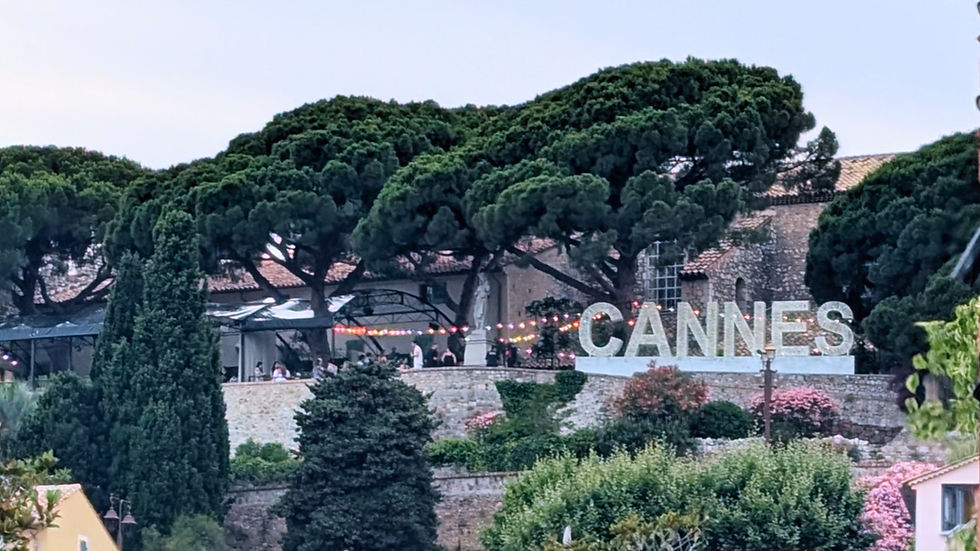
Elley Cheng: Hi, everyone. Welcome back to What's Left of Us. I'm Elley, and today we want to share with you some clips from our live panel discussion titled What Remains Human, which was held in Cannes at the Brands and Culture Villa. So pour yourself a glass of rosé and enjoy this discussion.
Speaker Intros
R. John Fidelino: Terry is the chairman of the Marketing Academy and the LIAs, the London International Awards, and also is the former chairman and CEO of Cannes Lions for many, many years. So the man who has brought us the experience is here on stage with us and will be driving this conversation [00:01:00] as we enter into a new era.
Elley Cheng is the founder of Useful Arts. She'll explain herself a little bit more, but-- or the organization more, but it's an organization founded on helping creatives navigate the world of AI. Phil Garnham, here we are. E-Executive Creative Director at Monotype who will be sharing his perspective on how to navigate AI but from a different angle, on, on how you-- how type can actually support the-- your differentiation and what the shortcomings might be of, of AI in type.
And of course, Adriana. Adriana will, will, of course, talk about the perspective of an actual creator using AI. And the themes that she had mentioned was really three things: disclosure, consent, and li- in terms of licensing, and then also this other question, which is, you know, to what degree have [00:02:00] our roles as creatives changed in this context?
Okay. So thank you all for being here. Terry.
Terry Savage: Great. Thank you. Well, welcome to the nine hundred and fifteenth session on AI this week. We will try and make it seem a little different and try and cover it from some different angles. and seeing, R. John's done such great introductions we don't have to go through that bit all over again.
I-- R. John?
R. John Fidelino: Yep.
Terry Savage: How long did it take you to put your boots on?
R. John Fidelino: In the morning? There's a z-- There's a zipper in the back, so
Terry Savage: I- Oh, is there
R. John Fidelino: a zipper?
Terry Savage: Okay. You've got the AI boots.
R. John Fidelino: Yeah, they're AI-enabled.
What is Useful Arts
Terry Savage: Okay. So Elley, please tell us what you're trying to achieve with Useful Arts.
Elley Cheng: Hi everybody, my name is Elley Cheng, and I run an organization called Useful Arts.
When you take a step back, you know, think about why [00:03:00] we are here today. We are here in Cannes to celebrate creativity. Now, a lot of times we have forgotten that fact because we see so many-- with so much glitziness, the logos, and everything. But then, and Terry, you know this very well. You have run the Lions for so many years.
It is all about the creators. It is all about those creative workers who have brought up-- brought out, you know, all their creativity and their hard work that gives us today and allowing us to celebrate that work. And so then when it comes to Useful Arts, it is a platform to celebrate creativity and support the creative community as we navigate through this new era with AI involved.
And there's a lot of facets here that we need to explore mainly because there are so many different constituents around this, this era here that will bring us to a new equilibrium. So what I mean is every time there's a change to [00:04:00] anything, like technology or, you know, some type of new regulation, the economics change again.
And so then this is where we need to find a new equilibrium and by bringing together all the voices that are so important to this. So I've been in this industry for quite a few decades and you know, I've run companies here, I've run P&Ls, and I know this very well is that we have to make sure all the parties come together and talk about the problem at hand in order to find the right solution forward.
Terry Savage: And Elley, how central is attribution to, to useful arts. So the concept that AI is copying the work of so many creatives, and how do they get recognized for that copying?
Elley Cheng: Ah, well, going straight into this. Okay. So as it stands today, if you wanna take a look at the [00:05:00] mathema-mathematical, portion of things, it is not protected as a
copyright law, specifically in the US, as it's written today. Because when you think about it, if I just go and prompt, say, "Hey, give me a picture," it'll go, "Whoa, I've got so many trillion pictures to choose from," so therefore, you know, the attribution is very low. So for an artist to say, "Hey, I, I want to have part of that compensation," that compensation, even if you were to get it, it's very, very tiny.
But, you know, things are improving because now we're seeing there are problems. And, and I know that even only a couple weeks ago, it's been announced that there is this thing called the Creator Act.
How do we protect someone's work when you can easily use style transfer using AI to basically copy someone's style? Because you have a certain originality, you have your technical skills, and that shouldn't be copied so easily because you spent years honing that skill. So, you know, with [00:06:00] that said, that's great.
It's fantastic we have that, you know, there. But, it's also, you know, I do know Adobe is part of the the originator of, of this, this, this bill. It's not law yet, but then we also see that there's a lot of gaps in terms of how it can be enforced, how would be, it be adjudicated. I mean, all of these technical practicalities are not defined.
And so then this is the reason why it's so important to bring the parties together to understand how it actually can function in the realistic world today. So short, long, very long answer to a short question.
Role of "Big Tech"
Terry Savage: It's, it's difficult. and, but, but I'm sort of interested because we're dealing with big tech here.
Elley Cheng: Yeah.
Terry Savage: And they will fight... If it's gonna cost them money, they will fight its positioning. How, how do you deal-- I mean, look at the, the, the news industry. The platforms stole news [00:07:00] and were caught kicking and screaming to actually pay some money back. They're gonna look at their bottom line, and they're gonna fight this hammer and tong.
How do you deal with that?
Elley Cheng: So I... Well, Terry, I think the way that we should think about it is the tech platforms is not-- They're not there to, you know, specifically fight on every single thing. That's not, what it is. But we have to think about it that they're one of the parties, the few big parties that are at the same table or in this party's economy.
And what we're sometimes not realizing is that we're actually in a game. And if you're-- anyone here is a game theory fan, I don't know we're in a prisoner's dilemma, where every single party is just simply trying to act to or behave to benefit themselves because they're not hearing each other. No one's understanding what's going on.
[00:08:00] So we have actually four main parties. We've got the creative community, the creators. We've got the, industry, those who employ them. We've got the technology platforms, and then we've got also the, the rule maker slash enforcer, right? So you have the referee and the rule maker, which means it's the, the lawmakers and those who-- the legal system that will help enforce it.
So then what we're seeing is that, you know, all these parties are often not talking. And if they're not talking, then you're not going-- everyone's gonna act for the benefit of themselves, and everyone, that pie shrinks together. And then, of course, if you know what prisoner's dilemma, if you're able to have that connection, you're able to have that phone call to, you know, talk to your, you know, accomplice, you know, you can actually think of a better plan so that you don't have to shrink the pie. No one has to lose.
Terry Savage: Okay. Adriana-
Phil Garnham: Can I... Sorry, sorry. I'm sorry. [00:09:00] I was just gonna add to that point. I feel like the creative industries have always been under that commercial pressure, regardless whether it's AI or whether it's just talent. You know, you're always having to prove yourself in some way.
So I don't really see this as any different, the situation, to what the career has always been for me. You have-- It is-- Or in some ways, and I hate to say it, it's almost as though it's a competition with everyone. You know, the reason we are here is because we've worked really hard to, like, get here. And we've-- There has been an element of competition.
You have to be honest about that. So yeah, commercial pressure is always with us regardless whether it's AI or whether it's just creativity at large.
Artist vs. AI
Terry Savage: Okay, thanks. Adriana,
interested in your perspective because you're an AI art pioneer, but you're also an Adobe ambassador. And I assume promoting AI tools are kind of the very heart of the debate today, and I'm just interested in your perspective.
That on one hand you are creating [00:10:00] AI and potentially using creative thinking from the past. How, how do you, how do you reconcile that, especially as you are promoting it for one of the companies that, is leading the charge?
Adriana Vita: Yes. So I think I'm somewhere in between, in the middle of this whole debate because I entered AI from a very traditional background.
So whenever I feel challenged by someone, "Oh, this is AI, you're not a real artist," I always send them to my original portfolio as a fashion illustrator, and I've worked with many luxury brands, and I'm a very highly skilled trained artist. So I always feel like I'm privileged to take that conversation, take it back because, hey, I'm a traditionally trained artist and I'm using AI.
I'm not afraid to do it because first of all, it's actually expanding my creativity. It's given me a lot of freedom of [00:11:00] development of my vision, like in that piece I was just presenting to you. And I know there's a lot of backlash on the AI artists and I feel like it's right now we're, we're just focusing from an AI creative perspective without the legal part of it.
There's a hate or love at the moment. And what I have witnessed, not just for myself, but also when I experience and see other brilliant AI artists, is that, This takes vision, and exactly, I disagree what you said. It's, it's, it's a career built on years of decades, sometimes of commitment and base development.
So if you want to still achieve your final vision, the model or AI is not to be, to blame that, "Oh, you just stole an idea." It's like, it still depends on a visionary of like, what do I want to produce? So in that simple example, like a Burrata, like I still have to come up with a concept, and then I still write the song, and then I [00:12:00] still have to develop the vision is that the tools have changed.
But I do agree on the part of the legal perspective and this is the reason why I like the association with, Adobe, and actually very proud of it because it's one of the few tech companies who focus on AI that has built their models on transparency and consent and materials. So in that way, I feel like there's a little bit of advantage, and I'm happy to support that progress.
But I agree with Elley, what you were just saying is that I feel like we're still the same time in the moment of building, so we still need to find a way of being transparent, transparent when the sources are coming from. But I still, again, I feel like it's a summary of my point is that this is something in the middle where it expands your creativity.
It still requires a great time and effort because I spent months on this. And I feel this workshop and this round table talk is an amazing example of like bringing you closer to understand the process [00:13:00] behind the AI creation because it doesn't happen with one click, and I'm really an advocate on that, to showcase that you can create something really, really innovative and new with AI.
Terry Savage: Kind of, I, I sort of get the feeling listening to you that Adobe is the new Medici of, of the twentieth century,
Adriana Vita: Yes and no- ... because I've been us-- Like I think I've-- I'm an Adobe girl. Like, oh, I'm so proud of it. Like
Terry Savage: Where do you get, where do you get that?
Adriana Vita: Yeah, sure. I've been using it. Like, I, I feel like it's more like I'm proud that Adobe's a Medici now with being AI because there's so much competition when it comes to AI tools right now, and I've been using Adobe for... Like, it's changed my life literally after the whole career, and like I'm sure many of you did as well. So I'm, I'm just happy that to be part of game and maybe have like one drop of an ocean to progress that
Terry Savage: further. And, and I get that. But does this mean you, though, are not an AI [00:14:00] artist, but an Adobe AI artist?
'Cause you're not going to other platforms to-
Adriana Vita: I, I, I have, if I have to be very transparent, it's, I think it's okay to explore other tools and understand what works for you. And I think-- And I did that as well, but I definitely right now am stuck on Adobe because of the many examples that I just showed you.
Yeah. But it, yeah. But de-definitely Adobe here.
AI's Impact on Business
Terry Savage: Okay, Phil, let's move on. Typeface. Yeah. Who, who'd have thought it? AI can generate new typefaces pretty instantly, I guess. That's what they say. No questioning that. Well, okay. But I want, I want you to do that. but what does it do to the value that a font company is selling?
How does it undermine your business model, or does it strengthen your business model?
Phil Garnham: I think it strengthens it. I think what it does is it removes production. I mean, if, if [00:15:00] the bar to entry is simply just creating a typeface of any kind, then sure, production is under pressure. Like, there's no question.
But I don't see that as being the value of type. Type is in everything. It's your voice. It's the way you speak, especially in every- such a strong signal to, you know, what's, how your brand is felt and perceived. so I, I kind of see our, our value proposition built more, more around, around, provenance authenticity, dare I say it.
Ah, I said it first. Yeah, everybody says it now. They can. But we have a-- our offer is very much around value in, being able to provide the authentic voice for a layer of classic typefaces. We have three hundred and fifty thousand fonts in our platform. And because of that, [00:16:00] everything, the way fonts travel, the way they show up across all these platforms, it's just wild trying to manage that in a, in just an operational sense.
So we're building client support around that, building a model that's very much based around showing up with the same voice consistently, cohesively, and actually not just using the correct typeface, actually doing it in the right way creatively. So with, like... my colleague and others in the team, we are actually supporting actual expression of type, not just choosing and using type, actually how that type is applied, 'cause that, too, has a huge influence on how the type shows up.
Terry Savage: But, but from a business perspective, I'm sure you're doing projections of what the potential impact is gonna be going forward. What, what are your projections telling, telling you?
Phil Garnham: If I'm honest, we're, we're embracing it. The, the projections do not scare us. I mean, I'm... I mean, if I, if they did, then I would really be [00:17:00] fully investing in the carpentry workshop in my garage right now.
But no, I'm not. I'm, I, I, I... You know, there's, I just see so a lot of opportunity here creatively, and that's where my heart is. You know, in... There's a lot of typefaces being made that are just copies of other typefaces for sure. But that's not why I got into this. I got into this to make something original, to make a mark, to genuinely put the thing, the brand, the, the feeling in, into the form.
And when you focus on that and stop looking at everybody else's work, that's when you find the real... the, the standout, the distinction, the genuine distinction that's gonna... You know, design is still valuable. It's the underpin to everything. That's why we're here. Like, you know, it's...
Yeah. So I'm not, I'm not worried about the projections. They are not scaring me. O-okay. But you're still faced with the fact that AI is still improving and getting better, and it's gonna get better and better and better.
Yeah. We have the models. We could, we could do it now if we wanted [00:18:00] to. We've, we've, we have an AI team at Monotype, but we also support, is it five, six thousand different foundries around the world?
Right. Right. It's a conscious decision to actually know, actually we're about human creativity. We could do it. We could put it out there. We're not. We're actually holding it back. We're, we're not even using it ourselves. We actually want humans in the middle of the creative process.
Terry Savage: Okay. And this is really way off target of this conversation.
I'm just interested, do you-- Are you in China and you have Chinese types
or?
Phil Garnham: We do, yeah. We, we we are in China. We're in Seoul. We're in Tokyo. Oh, okay. So you're, you're developing types in all languages and- Yeah, everywhere. When I joined Monotype, was it six years ago? That was- 400 of us and about 1,600 people around the world now involved in creating and supporting type across every market.
Terry Savage: Right. So, yeah, it's really good fun. I betcha.
Who Gets Credit and What is Protected
Terry Savage: So Elley, AI can learn from literally millions of creative works. [00:19:00] How do you track who originated that work, and how do you realistically attribute to the creators?
Elley Cheng: So as I mentioned before attribution is very difficult, right?
And so then it all comes down to the law, you know, in terms of, what is protected and what, you know, could be... And what is not protected. And, and people are very smart. They will exploit whatever that's not protected. I know this very well, actually. I, I was at Adobe for about seven years. So I was actually part of the team that got a lot of the license, licenses and con- consent from the artists, which was the base of the database that built the AI tool today.
So that is, you know, on the forefront of my, you know, thinking because it's all about the legality and what is enforceable and [00:20:00] not. But on the other hand, I also understand from the, you know, from the business perspective as well. I spent the last several years running either a P&L at Shutterstock, you know, as part of C-suite or, you know, transforming Pantone as president.
And then during these experiences, what I know is that at the executive level, we're always thinking about what we need to set as policy and what... How is this related to enforceable rules of the game. Now, what is interesting is that a lot of times the executives and the doers have a complete gap in the middle.
And actually if- just for fun, at Useful Arts, we actually did a quick research. And Useful Arts actually does a lot of research, and we work with the lawmakers, like for example, the New York State Assembly. We work with the, standards bodies as well to understand, you know, through research of the, [00:21:00] creative community, what actually is needed and what's actually working and not working.
Just for fun, I said I did a research on marketing, marketing and advertising professionals. And I worked through this research with some of the professors at the University of Tennessee. And what is interesting about this five-question research survey is that it actually tracks not just your explicit answer but your intrinsic answer based on the way you behave online.
And so what actually happens is that you're seeing that executives are worried so much about the, the protection of IP, which they said, "Actually, by the way, I have it done really well." And what they're not seeing is that at the team's le- at the executor's level- They're worried about brand and voice.
They're worried about disclosure and consent. They're basically worried about how this will show to the outside world. And [00:22:00] so you can see this gap is not addressed. Your executives are thinking, "Everything's great. We got a legal department. They're all over this. We're done." But then everyone who's doing the work realizes there's a huge gap, and they're freaking out.
And you can see the anxiety level, and anxiety is high. The worry about, you know, team transformation and future of work is very high. So you can kinda see that level is, is acting very differently. And they're also saying the company has no support or rules that will help us through this change. So you can, can see already today, even if we have the government stepping in, without the ability to talk to all the layers of all the different groups and all the players, the solution is not gonna be complete
Terry Savage: Thanks, Elley.
Does Attribution Matter?
Terry Savage: I'm gonna throw this open to both Phil and Adriana. Humans learn by studying existing work and styles of art [00:23:00] and they have over for centuries. Why should AI be treated any differently? Why should we have to worry about attribution?
Adriana Vita: Well, I can go first. So I think the main difference is that as a human being studying art, there's a certain limitation of how much we can learn.
Even if you're studying it for decades, and I definitely have explored a lot of art history as well, and there's still a limit to me that I would not able to learn about every artist in the world, whereas AI models are able to do billions learning of different arts and styles, which I will never be aware of, of in one lifetime.
And this led me to think a lot about postmodernism in general, which I find is a very interesting concept, if you don't know. But basically, postmodernism says that everything has already been created. so we're basically recycling [00:24:00] each other's work and ideas, and that's how I always felt in general about art when I found out about this, that I don't know if you've had any times, like, in, you know, moments when you see like, oh, I ha- you have a great idea, and then you see someone has done it.
It's, it-- I feel like there's a almost like a recycling creativity in the human consciousness. So that's how I like to sometimes think about AI. The main difference is that obviously we give an example in postmodernism of like Warhol that, created paintings of Marilyn Monroe. That was a very direct IP that was taken, and that was obviously very innovative, innovative at that time.
But now the legal courses have learned how to deal with these type of cases, right? So I feel the main difference right now with AI versus traditional art in that case of Warhol and Marilyn Monroe is that there's no set up legal rules yet. But I would still-- I still believe that AI is something that helps you [00:25:00] create a lot of new visuals.
It's just that I think the main issue is that we sometimes, and if you prompt something, you don't know exactly where the source is coming from. Because I may be aware of my inspiration, but the model may have been using artist's work that I've never even heard of in this lifetime. So personally, I think we're still building it.
I would-- I, I really am very much interested in how this space is gonna grow because I believe in transparency and even like quick example I wanted to mention. I did, um... It was, it, it was not a kind of content for interesting debate. I did like a AI collaboration with David Lynch, who's like obviously one of my... He's my favorite film director. And- What I found interesting as a feedback was not a backlash, but a huge interest from my audience on like how did I create it because I was very, very transparent. Hey, I'm doing a Burrata collaboration with David Lynch, [00:26:00] and people were asking me how did I do it in terms of like, creative collaboration because it was almost like as if I tapped into his consciousness, and I was very, very clear about that.
I'm not doing it all by myself, but I-- it's like as if I basically gave him a treatment I've written and how he would translate it. So it was a very, very interesting outcome. and I feel hopefully when AI leads and there's more regulation, at least that kind of perspective where the artist gets a presentation like, okay, I use, let's say, David Lynch inspiration and his foundation, whoever is the inheritance, is getting the profit of it. That's what something I believe in basically.
Phil Garnham: I'll add to that and, and take the Buddhist approach. Like, I think that, think about the self and the ego and the human hand, you know, as makers and creators, like we feel that emotional attachment to the marks we make. We always have, we always will. But I think I'm seeing a pivot now [00:27:00] where memory, brand memory, creator memory, teams of creatives, the collective memory is becoming more important.
Like this idea of like the brand archive. Nobody really cared about curating a brand archive, you know, the history of brands. Like just knocking it out, getting stuff done. They weren't thinking about archiving and categorizing. And now it's probably the most important thing. You know, like you wanna build on that legacy to remain who you are because there's so much everyone trying to look the same and fit in all the time.
Actually, the thing that's really important is pulling out that piece from your legacy, from your history that actually feels uniquely you. So I think AI is always pivoting us, pivoting us away from the idea of the self, the, the individual ego, the individual creator, and more into a collective team mindset, at least in the world of brand. So yeah, that's where I'm kind of... That's where I think it's heading.
What Will Matter in the Future
Terry Savage: We're sort of running out of time. I [00:28:00] think we've, we've, we've sort of reached our limit. But there's just one question I'd like to ask of each of you to, to wrap up. Our industry cares, creators care, but at the end of the day, do the eight billion end users on the plane- planet really care at all about where ideas originate?
Elley Cheng: Well, I think ultimately we all care about something when we see it. When you see the distinction, when you see the voice, when you see the originality, when you see that spirit and the soul, you care about that. And so then that's the, the part that we have to really remember how to retain. And I think, you know, with AI, the one thing that AI can do very well is actually helps us shore up our, you know, our weaknesses because it brings,
automatically brings you up to a certain baseline, average baseline. You can know [00:29:00] nothing about art, just ask it. It'll, eh, give you something decent, right? And so then what happens is that if you're not building on top of that, then you're just washed out on the baseline and that baseline's gonna keep rising as well as the work gets more advanced and more interesting.
And yes, there may be times when you question if the group, if the collective group, eight billion, are appreciating any distinction. But that will catch up. Right now they're just... maybe some of them are operating in the yesteryears and kind of go, "Oh, well, this looks the same so this must be great." And, you know, someone with a trained eye would be like, "This is not good.
I don't know what you're talking about. Wow, what am I doing here anymore?" Right? But that will change because the taste, the baseline will change, the taste will change, will rise and so then the competition, the, for distinction is still gonna continue. Now with that said, I think there's still a lot of gaps within [00:30:00] a lot of these organizations.
So I think I definitely encourage, everyone to think about how to first learn the rules of the game. So what's gonna be protected? What is not protected? What's going to be protected in the future, and what, how would that be, you know, functioning in the reality? And then speak with the team. Be transparent about what are we doing?
How can we do this? What's your anxiety? How can we shore that up? And then finally being able to, while you understand the rules of the game, what your gaps are, listening to your team, working with them, then finally having to figure out the ways to protect your brand, your voice, your distinction and identify what the soul is, right?
Though you're saying the brand history, that's... there's somewhere along that line is this one thread that is the soul, the collective soul and you have to figure out how you can protect that based on now the new rules and the new games. So that's kind of how I see [00:31:00] that. People do care. They may not seem that way, but ultimately they will.
I s- I
Phil Garnham: spent my entire career in education as a type designer. Like why you should care about type, why you should care about the way you speak. But it's just a
typeface, right? It's just a font. No one cares about the font. It's like it's in everything. Wake up. But no, so I think creators care right now. I think creative ops probably don't care that much right now because for them it's just an operational decision. Everyone's gonna care about it in maybe three, four, five years' time when they realize eventually, like I've seen so many cycles of trend now in typefaces, like, "All right, there's that thing.
There it goes. Oh, I'll see you again in five years." It's just like it's just constantly in a cyclical state. So yeah, right now everyone's gonna look the same. Yeah, four or five years' time everyone's gonna go, "Holy shit, we all look the same. We all read the same. We sound the same through, you know, our visual memory."
The way, the way [00:32:00] the fonts and are interpreted is just like that subconscious level. You just know who you're reading when you read it just through the shape of the letters. So yeah, it, it's gonna... everyone's gonna care, and then they're not gonna care. That's just the way things are. But I don't think AI has anything to do with it.
It's always gonna be like that.
Adriana Vita: I agree. It's so on point as what we just said. And I see it in fashion and a lot as well in social media. It's sometimes like a recycling of the same idea over and over and over. However, as an artist, I dare to say that real artistry and real creativity is gonna always stand out, and it doesn't matter if it's AI, it's still the human touch that is projected through AI.
So I think it's because AI is so new, I'm thinking especially about the visual part of it, visual narratives there's a tendency sometimes do people think that, "Oh, it, it didn't take any creative [00:33:00] output. It was just like a blurb I did in ChatGPT and something amazing came out." I strongly, as I said before, disagree with it because there's...
I think what is most important in the end of the day is the idea. And a strong idea will always be something that we should care about, and whether it's translated for photography, filmmaking, typography even, or AI, this is what's gonna make a mark and change in the creative, narrative and let's say legacy.
Terry Savage: Perfect. Okay. Well, I think that brings us to an end. So we should thank Elley, Phil, Adriana for their input today. And hopefully it was a bit more interesting than the other nine hundred and sixty-three panels. Thank you.
R. John Fidelino: And thank you as well, Terry, for leading us in this discussion. All your experience actually gives great context for us as well.
Thank you everyone, and thank you [00:34:00] all.