
At Cannes, 'Authenticity' Was as Abundant as the Warm Rosé
On stage, the industry says it's done panicking about AI. On the ground, the hard part is just beginning.
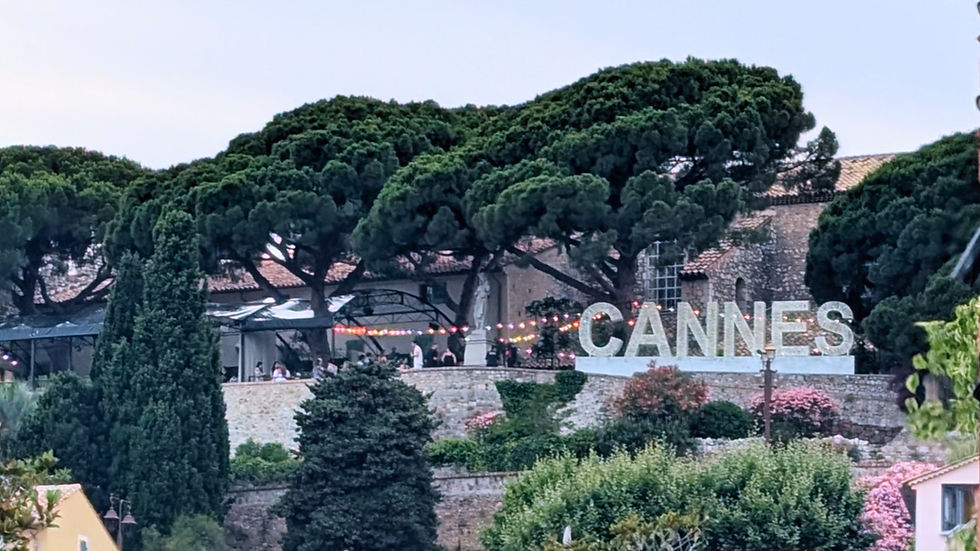
By the second day of Cannes Lions, the jokes had already started.
How many sessions could there possibly be about AI? How many times could one industry say the word “authenticity” before it lost all meaning? If we all had a sip of sun-broiled rosé every time someone said “AI” and “authenticity” in the same sentence, we would all be… well, we would be in Cannes.
But like many things, the more you hear something, the more it becomes the norm. The background. The ambiance. Maybe that is progress of a kind. Maybe we have graduated from “AI = productivity” to “AI + human touch = authentic productivity.”
Sorry, I mean productive authenticity.
Wait, maybe it should be producing authentically?
I guess it depends on which devil is hiding in which detail.
And there are devils.
This year, the dominant Cannes narrative was relief. The AI panic, we were told, had matured. The industry had moved from fear to function, from hype to ROI, from “what can AI do?” to “did any of it actually work?” Adweek similarly framed this year’s winners as a sign that AI had stopped being the headline and had become part of the creative process.
That is not wrong. It is just incomplete.
Because the anxiety did not end. It split into different pockets of the organization.
The loudest voices at Cannes were mostly carrying one version of the fear. Our survey suggests another version was sitting elsewhere: closer to the teams making the work, protecting the craft, and wondering what happens when the human parts of creative labor become the easiest parts to praise and the hardest parts to preserve.
What our survey measured
Before Cannes, Useful Arts ran an early survey of marketing and brand professionals across five dimensions: creative integrity, team concerns, AI proficiency, governance maturity, and risk readiness.
The method matters here. We captured two things at once: what people rated as important—their explicit answer—and what they reached for first, before they had time to manage the response—their intrinsic priority.
The gap between what people intend to work on and what actually worries them gives us the more authentic answer.
So what did the survey reveal?
Let’s just say, if AI were a car, the industry conversation has moved on from “Are cars good or bad for society?” to “How fast can this car go?” The Cannes answer was: very fast, as long as there is a human driver behind the wheel.
But the reality looks messier.
The car has no consistent brakes. The seat belts are optional and have no standards. The backseat is full of anxious people too professionally fluent to object or even stop smiling. The driver is being told to go faster, while the roads, laws, signage, and liability rules change depending on where and when you happen to be driving.
Clearly, responsible readiness is still lacking.
Finding one: the front seat and the back seat aren’t scared of the same thing, except one thing
Ask the C-suite and the VPs what their instinct flags first, and you get control and workforce risk: who is using what and how. Ask everyone at director level and below, and the instinct points somewhere else entirely: protecting the craft and public accountability for what gets made.
That is not a small divergence. The people running the industry and the people making the work are anxious about different things. And on the Croisette this year, you mostly heard the first group: leaders talking about deployment, efficiency, and ROI.
Protection of company IP—check.
Rolled out usage policy—check.
Protection of craft and talent… you can throw that to the back seat.
So when an executive takes the stage to say human creativity is irreplaceable, it is worth noticing: that is not even what the executive’s own instinct surfaced first. The people who reach for craft protection on reflex are the ones least likely to be holding the microphone.
Before I move on to the next section, keep in mind one important finding: all groups, both explicitly and intrinsically, worry about one thing—headcount reduction.
Finding two: everyone knows the seat belts are missing, but the trunk is safe and sound
The creative intangibles—quality of craft, brand voice, brand reputation, and the texture that makes work feel like it came from a specific human somewhere—score high on what people reach for first and low on what their organizations actually protect. Agencies feel the erosion of craft acutely on instinct, then post weak scores on whether they are doing anything about it.
The worry about the missing guardrail is real.
And across the entire dataset, the single most under-addressed risk was diluted brand voice. Organizations somewhere in the middle of their AI adoption journey are the most anxious about this. They have adopted specific tools, but built no governance around them.
This is the messy middle.
Meanwhile, the thing they do protect is the trunk holding the owned, legal, obvious stuff. IP and copyright get the attention because they are tangible and defensible. The seat belts for the people, the voice, and the craft go unbuckled because this is not the stuff that the legal department handles.
Read that next to the Croisette. The value the whole festival was chanting is the one the data shows least protected.
Authenticity polled first on instinct and last on follow-through.
Finding three: people aren’t using the car for errands, which may be why the productivity never shows up
“AI frees people up to be more creative” is the line.
But nobody draws a salary to wander off and “go do creativity.” So what do the “freed up” humans do?
Apparently, we cannot answer that question, because that is not actually the real picture.
Here is the fun finding: on instinct, people do not reach for AI to do the rule-based, set-it-and-forget-it work. They reach for it to do the judgment work: generating concepts, directing imagery, video, and motion.
Granted, everyone is early on both. Proficiency averages just 2.0 out of 4 on judgment tasks and 1.6 on rule-based ones. Nobody is good at either yet. But the instinct is consistent, and AI is pointed at exactly the work AI is weakest at and humans most want to keep.
The widest gap between what people reach for and what they can actually do is in the most human, least-automatable tasks of all: video and imagery, where proficiency score was under 2 out of 4.
So what does this all mean?
People are not excited about pointing AI at boring work, like scaled customization and reformatting assets. They are not even really learning how to apply AI to those use cases. Everyone is trying to use AI for judgment work, and most are not good at that yet either.
This may be why so many studies keep finding limited productivity impact. It may also be why there is so much contradiction.
Set that against the year leading into Cannes: Forrester estimated agency headcount fell roughly 8%, with WPP, Dentsu, and IPG each shedding thousands of roles. Across the wider economy, economists at Oxford Economics noted that some firms appear to be dressing up layoffs as a good-news story by pointing at AI.
AI is likely not the only reason causing the cuts, but the executives who are standing on the stage talking about the importance of human authenticity while layoffs happen risk their own reputation as being inauthentic, internally to your team as well as externally to the industry.
This is where I hope leaders actually do: don’t just incant the words—take real action and cite specific examples (read the Useful Stuff section).
What happens if we keep driving like this
If these gaps stay ignored, the bill comes due in ways that are hard to reverse: cultural backlash as the work starts to feel machine-made, a slow loss of connection with audiences that could once tell the difference, legal exposure arriving faster than the guardrails, and, quietly and most expensively, a loss of the very talent the industry keeps insisting is irreplaceable.
So why the gap?
A few reasons, and none of them are stupid.
There is pressure to have a solution now, so the instinct is to fix what is visibly broken and leave the rest. Attention goes to the obvious and defensible, like the legal protection of owned assets—the trunk—because that is where the clear wins are. Protecting the intangibles is no-glory work. Nobody gets promoted for installing the seat belt, only for building the faster car.
And because there is no acute damage, no crash yet, none of it feels urgent.
Here’s the Useful Stuff
This is the path I would argue for instead.
Step one: learn what is actually going on while time is still on your side.
Before you prescribe, diagnose. Survey your own people. Train them. Address the concerns. You cannot protect what you have not bothered to measure.
Feel free to DM me if you want to know how Useful Arts got the deeper insights.
Step two: put structure around what should be structured.
After you understand what everyone is worried about, do not stay ignorant of it because you assume the legal team will come to you if something is actually important.
They will not, at least not until sh* hits the fan.
Carve out a Friday and run a couple of workshops. One should focus on articulating your intangibles: what your voice, craft, and standards actually are, and how to protect and retain them. Another should involve the legal team, focused on staying aware and compliant with changing regulations around disclosure, use, and protection.
Step three: put structure around the unstructured.
The idea that AI frees up human time to spend on creativity does not really make sense, because thoughtful work takes time no matter how it is made. Creativity is expressed through making, and sometimes through the happy accidents that happen during the process.
Whether you are shooting, sketching, editing, or prompting, people have to make things in order to be creative and to keep learning.
Here are a couple of examples of what it means to put structure around the unstructured.
Reskill select teams with intention. Imagine you ask your in-house photographer to learn how to create images with AI. First, ask yourself what the goal of that reskilling actually is. Are you asking them to put out a mediocre product faster and cheaper? Or are you asking them to eventually produce better work?
It may be a while, if ever, before it can be both.
Knowing the goal grounds your expectations. It may also bring clarity to the anxiety around headcount reduction we talked about earlier.
Invest in apprentice programs, and make new talent do the work to climb, because that is how judgment is actually earned. By apprenticeship, I do not mean a shadowing program. I mean having your marketing up-and-comers get their hands dirty. Truly.
If someone aspires to manage influencers, give them space to try being one. They will develop the empathy and human connection to understand what makes that world tick.
What’s left of us
Put it together: an industry that says it values the intangibles, measures itself as not protecting them, cannot agree across ranks on what it is even afraid of, and is automating away parts of the path that produce the judgment it claims to prize.
And the word for all of that, on stage, is “authenticity.”
Authenticity may genuinely be what everyone at Cannes is working toward, but it can also come across as an alibi—the thing we say to sound human while the conditions that make human work possible erode.
That is why authenticity needs to be a discipline.
It is the talent you develop and reward. The voice and identity you protect. The continuous learning you practice. The governance you build and enforce.
Ultimately, it is the decisions you own and can stand behind.


